Saturday, December 1, 2012

North Korean archaeologists claim to have found the hideout of a unicorn


Arqueólogos norcoreanos aseguran haber encontrado la guarida de un unicornio

A group of archaeologists say they have discovered the North Koreans Unicorn lair of an ancient king, according to the official news agency of the country.The Lair of the mythical creature was found about 200 meters away from the temple of Yongmyong in the North Korean capital, Pyongyang.

According to the agency, archaeologists from the Institute of History of the Academy of Social Sciences have discovered the words "Lair of the Unicorn" carved on a rectangular stone. They assume that the inscription dates back to the ancient kingdom of Goguryeo period (918-1392) Northwest Territories comprising Chinese and Russian Far East and North and the Korean peninsula.

For North Korean scientists, the discovery of the den, associated with the legend of King Tongmyong, founder of Goguryeo kingdom, "shows that Pyongyang was the capital of ancient Korea."

However, the international media questioned the veracity of discovery as the North Korean media have repeatedly spread myths about leadership. For example, during mourning for the late leader Kim Jong-il, the country's state television said that until "the birds crying for his death."

Thursday, November 22, 2012

Thanksgiving Day


As we gather with family and friends today, we remember those who are no longer with us – the makers of the game who laid the foundation of today’s NFL and who paid too great a price. We’re thankful for having had them as teammates; for the wives, family and friends who cared for and supported them; and for the efforts of those who are working so diligently to change the culture and make the game safer.

We’re thankful, too, for the support we’ve received from teammates, friends and fans that enables us to continue to advocate for and provide support to retired NFL players. And we’re thankful for the critics, for they’ve made Fourth & Goal – an all-volunteer organization – stronger, wiser, and even more determined. In the words of Margaret Mead, “Never believe that a few caring people can't change the world. For, indeed, that's all who ever have.”

Happy Thanksgiving.

Bruce Laird
President, Fourth & Goal 
Baltimore Colts, 1972-1981
San Diego Chargers, 1982-1983

Tuesday, November 20, 2012

The Wild Bunch: Mark Pellington remembers his father

Football Father

Violence, rage, dementia, and the love between father and son
by Greg Jordan

http://www.sbnation.com/longform/2012/11/8/3616548/father-football
Mark Pellington knew violence long before he directed Pearl Jam’s video for the song “Jeremy,” a crazed, strobe-lit collage of adolescent despair, for his father Bill, a legendary linebacker for the Baltimore Colts in the 1950s and 60s, was as violent a player as the game has ever seen.

The video, filmed in 1992, became an MTV staple for the rest of the decade until the Columbine shootings made its public airing taboo.

Mark, though his career as a filmmaker took off, was dragged down for years by the errant critique of the violence in “Jeremy.” In the final scene of the video, the long-bullied Jeremy takes revenge by shooting himself in front of his schoolhouse torturers. Problem was, censors ditched that scene, and unknowingly multiplied its ill effect. Rather than the edited-out suicide, we saw the blood-stained classmates, and Jeremy’s self-destructive revenge was misconstrued as murderous. Then Columbine, the real event the censors no doubt feared, provoked yet another overheated discussion about that legendary fine line between art and life, for “Jeremy” was resurrected as a culprit.

Mark was never bullied in school himself. He was and is a bear of a fellow, resembling his father in both countenance and girth. To those who knew his father, it is clear that they share the same gentleness, too.

But, at the time of the making of the video, a vicious disease not then so regularly named as Alzheimer’s was beating the hell out of Mark as he watched his father succumb almost overnight to it.

How Mark channeled the violence of his father’s decline and death to spark the creative fury of “Jeremy” didn’t even dawn on him until recently. But it dawned hard, for the sudden, shocking death of his wife helped Mark realize that, in many ways, his whole artistic career has been a conversation with his father – the intelligent, mauling, dignified, suffering and battle-scarred old Colt.

I began this story with Jimmy Shelton, our crack video editor, as an effort to depict the consequences of football’s head trauma epidemic on the children of NFL players. But stories take you where they will, and it became simply a story about how sports, like art, can sanctify the complicated love between a father and a son.

Sunday, November 11, 2012

Veterans Day


Here’s a snapshot of some of the NFL players who have served in the U.S. military. Today, on Veterans Day – and always – we salute you.
·          
  • After graduating from high school, Mike Anderson joined the U.S. Marine Corps and served for four years. As a rookie with the Denver Broncos, he earned NFL Offensive Rookie of the Year honors, rushing for more than 1,487 yards and 15 rushing touchdowns. He played for the Broncos from 2000 to 2005, before spending the 2006 and 2007 seasons with the Baltimore Ravens.
  • During World War II Chuck Bednarik, the last of the NFL’s two-way players (1949-1962), flew 30 missions over Germany in a B-24 Liberation Bomber and was decorated with the Air Medal, four Oak Leaf Clusters and the European-African-Middle Eastern Campaign Ribbon, with five Battle Stars.
"Well, you learn a lot when you are in that situation. You're being shot at. I was just a kid. I had to learn how to survive and to work with my team. We did that. We survived. It was brutal. I'm thankful to be here to enjoy my life." – Chuck Bednarik

  • Rocky Bleier was drafted twice – by the Pittsburgh Steelers in 1968 and by the U.S. Army in 1969, after playing one season with the Steelers. Seriously injured during his service as an infantryman in Vietnam, Bleier was told he would never play football again. After three surgeries, the Purple Heart and the Bronze Star recipient made the Steelers’ team in 1972 and started all four of the Steelers’ Super Bowl teams in the 1970s.
"In combat, as we have come to learn, when you're put in harm's way, there is a chance of permanent injury. There might not be a tomorrow, and that is always the question that lingers in one's mind. Will I get back safely? Will I be able to survive this combat? In football, there will always be next week." – Rocky Bleier

  • A standout athlete at Georgetown University, Al Blozis won the NCAA, IC4A, and AAU shotput championships indoors and outdoors and was the IC4A discus champion in 1940, 1941 and 1942. UPI selected Blozis as one of three outstanding athletes of 1941 – the other two were golfer Ben Hogan and boxer Joe Louis. A third-round draft choice of the New York Giants in 1942, he started at offensive tackle. At 6’6, 240 pounds, he needed a dispensation to serve in the military (because of his size). On his first patrol, Lt. Blozis was killed in the Vosges Mountains during an encounter related to the Battle of the Bulge. He was 26 years old.
  • West Point graduate Caleb Campbell was a seventh-round draft pick by the Detroit Lions – and the first Army player drafted by an NFL team in more than a decade. After serving two years in the U.S. Army, Campbell finally reached the NFL in 2010, when he was signed by the Lions as a free agent. He has since played for the Indianapolis Colts and Kansas City Chiefs and is currently a free agent.
  • Notre Dame’s Jack Chevigny scored the winning touchdown against Army in the “Win One for the Gipper” game in 1928. Although Chevigny never played in the NFL, he became head coach of the NFL’s Chicago Cardinals in 1932. When World War II broke out, he enlisted in the U.S. Army. Although he survived the initial landing at Iwo Jima, Chevigny was killed in action within 48 hours.
  •  A U.S. Marine during World War II, Art Donovan saw action in some of the fiercest battles in the Pacific Theater. He was an anti-aircraft gunner on the light aircraft carrier, the USS San Jacinto, during the Battle of Leyte Gulf in October 1944. After 13 months at sea, Donovan volunteered for the Fleet Marine Force and was involved in the 82-day-long Battle of Okinawa. He was the first NFL player inducted into the Marine Corps Sports Hall of Fame. Donovan earned the Asiatic Pacific Area Ribbon (six stars) and the Philippine Liberation Ribbon (two stars), with each star representing a battle in which he participated. During his 12-year NFL career with the New York Yanks, the Dallas Texans and the Baltimore Colts from 1950 to 1961, Donovan earned All-Pro honors five times, played on two NFL championship teams in 1958 and 1959 with the Colts, and was inducted into the Pro Football Hall of Fame in 1968.
‘‘People think the [NFL] players and owners making all that money are heroes. ‘‘You are my heroes — thank you.” – Art Donovan, speaking to U.S. Marines at Quantico in 2011.
  • Otto Graham served in the U.S. Coast Guard during World War II and accepted a two-year contract from the Cleveland Brown while still in the Coast Guard. During his 10 years as the Browns’ QB, the team lost only 17 games, went to the championship game each year and won seven league titles.
  • At Auburn University, Kevin Greene was a member of the ROTC and later served 16 years in the Army Reserves. The five-time Pro Bowl LB is credited with 160 sacks during his NFL career. He is now the Green Bay Packers’ linebackers coach.
  • Enlisting in the U.S. Army in 1943, Lou “The Toe” Groza joined the Army Service Training Program and served with the 96th Infantry Division as a surgical technician in Okinawa in 1945. In May 1945, Groza signed a contract with the Cleveland Browns, agreeing to play for the Browns after the war ended. Over the his 21-career with the Browns, Groza was a kicker and an All-Pro offensive tackle. When he retired in 1967, Groza held the career record for most points – 1,608.
  • George Halas, who founded the franchise that in 1920 became the Chicago Bears, coached the team for 40 seasons and won six NFL titles. Halas served in the U.S. Navy during World War I and again during World War II, temporarily leaving his coaching career from 1942 to 1945. When he retired from coaching in 1968, he held the record for most wins with 324.  
  • Ahmard Hall, who played for the Tennessee Titans from 2006 to 2011, is a U.S. Marine who served in Kosovo in 1999 and Afghanistan in 2002.
  • Chad Hall starred for the Air Force Academy and served two years in the Air Force before signing with the Philadelphia Eagles in 2010.
  • A star fullback and guard at the University of Georgia from 1937 to 1939, Howard “Smiley” Johnson went on to play two seasons at guard for the Green Bay Packers. After the attack on Pearl Harbor in 1941, Johnson joined the U.S. Marine Corps and in 1944, earned a Silver Star for "conspicuous gallantry" during the battle for Saipan. Wounded by a shell during the Battle of Iwo Jima, he directed a corpsman to help others who’d also been wounded. He died of his wounds while the others were being treated.
  • Charlie Joiner served in Vietnam before launching his 18-year pro football career in 1969 with the Houston Oilers. Joiner spent 3½ years with the Oilers, 3½ with the Bengals and 11 with the San Diego Chargers.
  • Ralph Heywood is the only NFL player to have served in World War II, Korea and Vietnam. After playing only five games at USC in 1943 – and earning All-American honors as an end and punter – he was drafted by the U.S. Marine Corps and was sent to the South Pacific aboard the USS Iowa during World War II. He was released from active duty in 1946 and went on to a pro football career, playing for the All-American Football Conference’s Chicago Rockets (1946) and the NFL’s Detroit Lions (1947-48), Boston Yanks (1948), and New York Bulldogs (1949). He resumed his military career in 1952 and remained in the Marine Corps for 32 years, serving in both Korea and Vietnam and retiring as a colonel. Among his many honors: the Vietnam Service Medal with 1 Bronze Star, Vietnamese's Cross of Gallantry with Gold Star, and the Republic of Vietnam Campaign Medal with Device.
  • Following his rookie season with the Buffalo Bills in 1968 – during which he was named the Bills’ Rookie of the Year – Bob Kalsu joined the U.S. Army as a second lieutenant in the 101st Airborne. He arrived in Vietnam in November 1969 and on July 21, 1970, was killed in action with his unit came under enemy fire. 
  • U.S. Naval Academy grad Eric Kettani was on the New England Patriots practice squad when he was recalled to active duty for the U.S. Navy. He is now on the Washington Redskins practice squad
  • Tom Landry enlisted in the Army Air Corps during World War II and flew 30 missions as a B-17 co-pilot, even survived a crash in Belgium after a bombing run.  Landry played seven years in the NFL, including one season with the New York Yankees and six with the New York Giants. He is perhaps best known for his Hall of Fame coaching career with the Dallas Cowboys, during which the Cowboys won two Super Bowls and enjoyed 20 consecutive winning seasons.
  • Hall of Fame CB Dick “Night Train” Lane served four years in the U.S. Army during World War II and the Korean War. During his NFL career with the Los Angeles Rams, Chicago Cardinals and Detroit Lions, he intercepted 68 passes (including 14 in his rookie season), earned first- or second-team All-NFL honors from 1954 to 1963, made the Pro Bowl seven times, was selected to the 1950s All-Decade team, and was named to the NFL’s 75th Anniversary All-Time team.
  • Just 5’6 and 166 pounds, Eddie LeBaron earned the nickname “The Littlest General” during his nine-month stint in Korea as a U.S. Marine. Wounded twice, he earned the Bronze Star and Purple Heart. 
  • Former Kansas City Chiefs’ and Buffalo Bills’ Head Coach Marv Levy served in the U.S. Army Air Corps during World War II. As head coach of the Bills, he led the team to four straight Super Bowl appearances.
"This is not a must-win. World War II was a must-win.” -- Marv Levy, when asked if after three Super Bowl losses, the team’s fourth Super Bowl appearance was a “must-win” game
  • One of two NFL players to win the Congressional Medal of Honor – and the only one to receive the award posthumously – Jack Lummus was a rookie two-way end with the New York Giants in 1941. He played in the Giants’ Eastern Division title game on December 7, 1941, and in the NFL Championship Game. In January 1942, Lummus joined the U.S. Marine Corps and rose through the ranks to become a company commander.  He was among the first Marines to land on IwoJima in February 1945 and on March 6, was given command of a Rifle Platoon attached to the 2d Battalion, 27th Marines, 5th Marine Division. Two days later, despite being wounded by grenade shrapnel, Lummus knocked out three enemy strongholds that were preventing his platoon from reaching its objective. He then stepped on a land mine which blew off his legs. He continued to urge his men forward, until he was carried to an aid station, where he died. His Medal of Honor citation reads, in part:  “By his outstanding valor, skilled tactics, and tenacious perseverance in the face of overwhelming odds, 1st Lt. Lummus had inspired his stouthearted marines to continue the relentless drive northward, thereby contributing materially to the success of his regimental mission. His dauntless leadership and unwavering devotion to duty throughout sustain and enhance the highest traditions of the U.S. Naval Service. He gallantly gave his life in the service of his country.”

 "Well, doc, the New York Giants lost a mighty good end today.” – Jack Lummus, at an aid station after being mortally wounded on Iwo Jima

  •  Baltimore Colts’ Hall of Fame DE Gino Marchetti enlisted in the U.S. Army as a high school senior in 1944. In October 1944, he landed in Europe with Company I, 273rd regiment, 69th Infantry Division, and soon participated in the Battle of the Bulge as a machine gunner. During his NFL career, he was named to the Pro Bowl 11 times and to the NFL All-Pro first team nine times. He was a member of the Baltimore Colts’ NFL championship teams in 1958 and 1959.
  • Wellington Mara interrupted his front office career with the New York Giants when he served in the U.S. Navy during World War II. Serving on aircraft carriers in the Atlantic and Pacific theaters, Mara reached the rank of Lieutenant Commander.

  • The Chicago Bears’ assistant head coach and defensive coordinator Rod Marinelliwas an infantryman in Vietnam in 1969.


  • Willie Miller served two tours in Vietnam with the Special Forces and earned a Silver Star. Following his military service, he attended Colorado State University and then joined the Cleveland Browns as a 28-year-old rookie in 1975. Miller’s seven-year NFL career included stints with the Cleveland Browns, Tampa Bay Buccaneers and Los Angeles Rams. 
  • Before launching his Hall of Fame NFL career with the Dallas Cowboys, U.S. Naval Academy grad and Heisman Trophy winner Roger Staubach served a four-year stint in the Navy, including two years in Vietnam. Gil Brandt, who was vice president of the Cowboys when the team drafted Staubach in 1969, shipped footballs to the QB in Vietnam to maintain his football skills during his free time. The shipments paid off – Staubach was the MVP of Super Bowl VI.
  • Don Steinbrunner, who joined the ROTC in college, was called to active duty following his rookie season, 1953, with the Cleveland Browns. Following completion his two-year tour of duty as an Air Force navigator, he opted for a military career over a pro football career. In 1966, he shipped out to Vietnam and was soon shot in the knee during an aerial mission. As a result of that injury, he was offered – and declined – an opportunity to accept a less dangerous assignment. At 35, he felt he was better suited to serve than the younger, less experienced soldiers he’d served with. On July 20, 1967, Steinbrunner's plane was shot down over Kontum, South Vietnam, and all five men on board were killed. He was posthumously awarded the Purple Heart and the Distinguished Flying Cross.
  • Inspired by the attacks of September 11, 2011, Pat Tillman walked away from his Pro Bowl career with the Arizona Cardinals – and a three-year, $3.6 million contract – to join U.S. Army Rangers in 2002. He was killed in Afghanistan in 2004.
  •  Ralph Wilson Jr. enlisted in the U.S. Navy and served in the Atlantic and Pacific theaters during World War II. He founded the Buffalo Bills and was instrumental in merging the AFL and NFL in 1970. 
 
Sources:

Monday, October 8, 2012

Kansas City Chiefs’ OT Eric Winston got it right

In his remarks about some Chiefs’ “fans” cheering when Matt Cassel suffered a head injury, Eric Winston got it right. In the years since I played the game, we’ve learned a tremendous amount about the long-lasting ramifications of football injuries, particularly concussions and head trauma.

Researchers at Boston University’s Center for the Study of Traumatic Encephalopathy estimate that retired NFL players are at least eight times more likely to be diagnosed with ALS than the general adult male population. The CSTE researchers also discovered a link between repetitive head trauma and a disease similar to ALS, as well as to Alzheimer’s.

More than 25 retired NFL players have been diagnosed with chronic traumatic encephalopathy (CTE), the result of repeated blows to the head. Former Baltimore Colts’ Hall of Fame TE John Mackey was one of those players. Diagnosed with dementia at 59 years old, Mackey became a startling symbol of the effects of repetitive head trauma as he declined over the 10 years before his death in July 2011.

John Mackey was the catalyst for the Baltimore Colts’ alumni to form Fourth & Goal Foundation to advocate for improved pension and disability benefits and representation for former NFL players, and to raise funds to assist those retired players in need. Through this all-volunteer effort, we’re raised hundreds of thousands of dollars to help support those who, like Mackey, suffer the long-lasting effects of football injuries.

That’s why it bothers me that some “fans” cheered when Cassel was injured. I’ve seen too much – too many teammates suffering, too many wives struggling to care for their husbands, too many children growing up without their father – to remain silent.

I urge those who cheered Cassel’s injury to visit Fourth & Goal’s website, www.FourthAndGoalUnites.com, to read about our efforts to assist retired players who are dealing with the long-lasting effects of football injuries, and Sports Legacy Institute’s website, www.SportsLegacy.org, to learn about research into head trauma and CTE. If these “fans” still feel compelled to cheer a player’s injury, I urge them to sell their Chiefs’ game tickets and donate the proceeds to support Fourth & Goal, Sports Legacy Institute and/or Matt Cassel’s favorite charity.

It’s the least they can do.

Bruce Laird
President, Fourth & Goal Foundation
Baltimore Colts, 1972-1981
San Diego Chargers, 1982-1983

Saturday, September 29, 2012

Profile in Courage: O.J. Brigance

According to baseball great Jackie Robinson, “A life is not important except in the impact it has on other lives.” Today, we honor someone whose life has had a tremendous impact on other lives, on and off the football field – O.J. Brigance, who is celebrating his 43rd birthday.

In 1999, the Miami Dolphins selected O.J. as the team’s recipient of the Ed Block Courage Award, recognizing his comeback from a severe back injury.  While they acknowledged and appreciated his effort to overcome the injury, O.J.’s Dolphins teammates had no idea just how much courage their teammate would exhibit in the years to come. 

With the CFL’s B.C. Lions, Brigance recorded 20 sacks and earned All-Conference honors in 1993. In 1995, he was a CFL All-Star with the Baltimore Stallions during their Grey Cup championship season. He captained the Miami Dolphins during two of his four seasons with the team and was an integral part of the Baltimore Ravens’ Super Bowl XXXV championship team.

As Director of Player Development for the Baltimore Ravens – a position he has held since 2004 – Brigance helps players prepare for and transition to successful careers off the field. His efforts were recognized by the NFL with its Best Overall Player Development Program Award in 2005 and 2006, the Most Outstanding Internship Program Award in 2005, and the Outstanding Continuing Education Program Award in 2007.

In May 2007, O.J. Brigance was diagnosed with amyotrophic lateral sclerosis (ALS) – better known as Lou Gehrig’s Disease – a progressive neurodegenerative disease for which there is no cure. Although ALS has robbed O.J. of much in the last five years, it did not – it could not – take away his courage.

In May 2012, at Rice University’s 2012 Laureate Dinner, where he was awarded the Distinguished Alumni Award, O.J. told a distinguished audience of alumni, faculty, staff and friends of the university, “My greatest accomplishment has been taking this personal challenge of battling ALS and using it to impact the world around me.”

And impact the world, he has.

O.J. and his wife Chanda founded the Brigance Brigade Foundation, which raises funds to help ALS patients access to treatment, medications, equipment and support services. Through the foundation, the Brigances partner with and support The Robert Packard Center for ALS Research at Johns Hopkins. In fact, O.J. and Chanda have served as honorary chairs of the Packard Center’s annual Fiesta 5K, which raises funds for research to find a cure.

Life’s adversities serve a dual purpose,” O.J. said at Rice. “To refine us personally and to give us experiential knowledge in serving others who may be walking the same journey. Our adversity is never just for us, but to bless others around us.”

Researchers at Boston University’s Center for the Study of Traumatic Encephalopathy estimate that retired NFL players are at least eight times more likely to be diagnosed with ALS than the general adult male population. The CSTE researchers also discovered a link between repetitive head trauma and a disease similar to ALS.

 That’s why Fourth & Goal opposes bounties. That’s why we support the Commissioner’s measures to improve player safety. That’s why we recognize and, quite frankly, appreciate the Commissioner’s efforts to increase benefits for former players. That’s why we support the Brigance Brigade and The Robert Packard Center for ALS.

One more quote from the man himself: “Through the triumphs there has come a greater confidence and through the challenges has come a greater clarity of purpose.”

That’s why we’re proud to know O.J. Brigance.

Happy Birthday, O.J. – and thank you.

Bruce Laird
President, Fourth & Goal
Baltimore Colts, 1972-1981
San Diego Chargers, 1982-1983

Wednesday, September 19, 2012

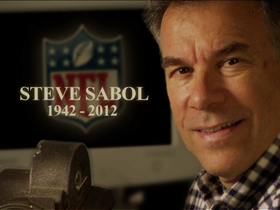
Steve Sabol

Thanks to Steve Sabol and his father Ed, we grew up watching the highlights of those who came before us — the makers of the game — on NFL Films. Later, Steve captured the receptions, the tackles, the interceptions, the rushes, the touchdowns, and the field goals that defined our own careers in the NFL.

Image
Like his father before him, Steve Sabol brought NFL football into our homes and the homes of countless football fans across the nation. He carried NFL football into non-NFL cities and helped expand NFL teams’ fan base well beyond their geographical borders. Perhaps as much as any one player, coach or executive, his contribution to the NFL and to the game of football had an impact far beyond the confines of the stadium.

Steve Sabol, who died yesterday at age 69, often quoted his father, “Tell me a fact, and I’ll learn. Tell me the truth, and I believe. But tell me a story, and it will live in my heart forever.” Through the stories he told in NFL Films, Steve ensured that future generations of football fans would know – and appreciate – what past generations of NFL players did to build the game and the league. He left a legacy that is his – and ours.

May he rest in peace.

Bruce Laird
President, Fourth & Goal
Baltimore Colts, 1972-1981
San Diego Chargers, 1982-1983

Thursday, September 6, 2012

Art Modell


It’s a sad day in Baltimore, at the NFL offices in New York, and in NFL cities across the country. One of the league’s stalwarts – Art Modell – passed away early this morning.

Art Modell was described as controversial. We’d describe him as a visionary. Long before he made the difficult, even heartbreaking, decision to move the Cleveland Browns team to Baltimore, he was among the first to recognize and embrace the impact television could – and did – have on NFL football. Along with Baltimore Colts’ owner Carroll Rosenbloom and Pittsburgh Steelers’ owner Art Rooney, Modell agreed to move his Cleveland Browns’ team to the American Football Conference in 1970, following the merger of the NFL and AFL.

Even his most controversial decision – to move his franchise – left the Browns’ history and heritage in Cleveland and brought an NFL team to football-starved Baltimore, which had lost its own team some 12 years earlier. Today, for example, thanks to Art Modell’s vision, Jim Brown is in the Pro Football Hall of Fame as a Cleveland Brown – not a Baltimore Brown.

We will remember him as a good and decent man who contributed greatly to the NFL, to Baltimore and Cleveland, to the communities in which he lived, to the charities in which he believed, and – perhaps most of all – to the active and retired players whom he loved, for whom he showed compassion and whom he treated as his family. He truly embraced the league’s past, present and future.

We deeply regret that neither Art nor his wife Pat lived long enough to see him enshrined in the Pro Football Hall of Fame.

Our thoughts and prayers go out to his family and friends.

Bruce Laird
President, Fourth & Goal
Baltimore Colts, 1972-1981
San Diego, 1982-1983

Wednesday, September 5, 2012

Detroit Lions’ Gail Cogdill Needs Your Help


My name is Kristen (Cogdill) Dunlap and I’m the oldest daughter of former Detroit Lion great Gail Cogdill (1960-1970). On behalf of the Cogdill family I’m reaching out to you today to ask you for your financial support in helping my father battle a life threatening heart condition. His heart condition was brought on by years of playing professional football during an era when players had no one looking out for their physical or financial best interests.


His last hope for survival is adult stem cell therapy. This is the same procedure that many current and former professional athletes are using to help recover from injury and have experienced life changing results. Except for his heart, my dad is in great shape which makes him the prime candidate for this procedure.

Without your support he may have less than 12 months to live. We ask that you help my dad and our family fight this battle as we are not prepared to lose him over an obstacle of money. It‘s not easy to ask for help, as we all have our own causes, but any size donation would be greatly appreciated.

We ask that you click on the link below to read more about my Dad and help support our fund raising efforts.

http://www.gofundme.com/xm5ag

Friday, July 6, 2012

Right and Wrong


Yesterday – two days after NFL Commissioner Roger Goodell denied appeals by Will Smith, Anthony Hargrove, Jonathan Vilma, and Scott Fujita, who have been fined and suspended for participating in the bounty scheme – the NFLPA filed a lawsuit against the NFL on behalf of Smith, Hargrove and Fujita. Vilma has already filed two separate lawsuits against the league and the Commissioner.

In the NFLPA’s lawsuit, the union claims that Goodell violated the collective bargaining agreement in his handling of the bounty scheme. The lawsuit asks that previous arbitration be set aside and a new arbitrator put in place to preside over the issue.

Commissioner Goodell has been diligent in pursuing the truth, determined to rid the league of bounty schemes and dedicated to protecting the game and those who play it. Fourth & Goal supports the Commissioner and stands behind him in these efforts. His unprecedented actions to address the bounty scheme – from the warnings that were issued to New Orleans Saints’ general manager Mickey Loomis and head coach Sean Payton after the 2009 season, to the suspensions and fines of Saints officials and former and current Saints’ players – are warranted, right and just.

Let me make one thing clear: bounties have no place in football. This is not about making a tackle inside the 20. This is not about making a big play. This is not about standing out on special teams. Bounties are about making sure a player – an NFL teammate – is injured, presumably to give the defense an advantage. Football is a game of strategy and skill, not bounties.

Those ignoring, encouraging, or engaging in a bounty system are overlooking something germane to NFL football. With an annual turnover of nearly 40% of players on NFL teams, the target of a bounty yesterday may well be a teammate tomorrow.

As NFL Counsel Jeff Pash observed during a discussion with the Associated Press in April, the NFLPA represents all active players, yet the union is protecting and defending only those who participated in the bounty system. Those who were the targets of bounties and/or were injured by bounty-incentivized hits – and all other active NFL players – have been abandoned by the union in the bounty scandal. Perhaps the safety of the targeted players is not among the union’s priorities.

The NFLPA’s determination to defend players who were found to have been involved in the bounty scheme, its disregard for the players who were targeted and for the majority of the players it is supposed to represent, and its disrespect for the game, the players and their families is incomprehensible, inexcusable and indefensible.

In his resolve to holding team officials and players accountable for bounties, in his commitment to making the game safer for players, and in his dedication to protecting the integrity of the game,Roger Goodell has it right. The NFLPA has it wrong.

Bruce Laird
President, Fourth & Goal
Baltimore Colts, 1972-1981
San Diego Chargers, 1982-1983